How Independent Artists Can Create Content Consistently—Without Feeling Like Marketers
Most independent artists don't struggle with creativity, they struggle with content. The moment the camera switches on, the creative instinct that fuels songwriting suddenly feels like a marketing obligation. Posting becomes performance anxiety, not artistic expression. And yet, the artists who build lasting careers aren't the ones who master social media algorithms or content marketing tactics. They're the ones who translate their artistic world into shareable moments.
Austin Kleon's principle—that creative work becomes more powerful when we "show our work"—captures this shift perfectly. Sharing isn't a step outside the creative process; it's an extension of it. For music artists, content isn't a separate task or a marketing layer added after the art. It's revealing the world that shaped the music in the first place. This reframe—content as translation rather than promotion—is the foundation of sustainable creative visibility.
What Fans Want From Music Artists: The Five Attributes of Content That Engages
Research on fan attachment is consistent: audiences connect through identity, narrative, process, belonging, and emotional resonance, not through polished promotional posts. Studies on parasocial relationships and music fandom show that fans use artists as "symbolic mirrors" to understand themselves, adopting artist-adjacent identities as components of their own self-concept.
Here are the five attributes of content that builds lasting engagement:
Identity — Artists become symbolic mirrors. Your work helps fans understand themselves. Research shows that music preference becomes part of "who I am" and "who I want to be." When Mitski explores creative exhaustion and industry disillusionment, she's not just describing her career, she's giving language to what her audience feels. Fans develop what psychologists call "brand-based self-realization": they engage with artists who help them imagine or perform ideal self-versions.
Narrative — The ongoing story provides context and meaning. Each release becomes a chapter rather than an isolated moment. Tyler, the Creator's era-based approach (from Flower Boy to Call Me If You Get Lost) gives fans a through-line to follow. Cultural branding research emphasizes that iconic artists function as "identity myths", offering narratives that help audiences resolve tensions they experience in their own lives.
Process — Visibility into creation humanizes the work and builds trust. When fans see the creative journey—studio clips, voice memos, creative struggles—they develop what researchers call "relational labour attachment." The Beths built their community through tour diaries with self-deprecating humour, studio outtakes showing collaborative dynamics, and Instagram stories documenting van breakdowns. This transparency doesn't dilute artistry; it deepens fan investment by satisfying fundamental psychological needs for connection and relatedness.
Belonging — Content functions as community invitation. BTS demonstrated that community isn't just audience—it's the brand itself. ARMY's participatory culture became inseparable from BTS's mythology of self-acceptance and youth empowerment. Research on K-pop fandoms reveals that adopting fandom identity often creates deeper attachment than the music itself: fans join communities for belonging, then develop artist passion through community socialization. At any scale, content that signals "you belong here" builds cohesion.
Emotional Resonance — Sincerity creates connection faster than polish. When Guitarricadelafuente gained early traction, it wasn't through high-concept videos but through lo-fi guitar clips recorded at home, where the intimacy of the setting became inseparable from the music's emotional vulnerability. Audiences distinguish between calculated performativity (perceived as inauthentic) and coherent personal expression deployed strategically (perceived as authentic). What scholars call "performative authenticity" means audiences understand that brand construction is deliberate, yet this awareness doesn't negate perceived authenticity if the brand remains internally coherent.
Notice what's missing: promotional language, calls to action, "content pillars" designed for algorithms. These artists aren't producing corporate content. They're extending the logic of their artistic work into formats fans understand.
From Promotion to Translation: How Successful Artists Think About Content
What independent artists need isn't another marketing course. They need a translation strategy: a systematic way to convert their artistic universe into shareable moments that feel authentic rather than promotional.
Patterns from successful emerging artists reveal how this works in practice:
Visual coherence precedes sonic coherence. Research on artist branding shows that recognizable aesthetics help audiences understand your world faster than a catalog of songs. Karol G's blue colour palette signaling empowered femininity and Genesis Owusu's crimson antihero persona demonstrate this principle. Billie Eilish's deliberate adoption of oversized clothing and distinctive colour palettes created brand recognition before many listeners could distinguish her individual tracks.
Hybrid identity becomes competitive advantage. Artists with layered cultural, linguistic, or stylistic identities attract communities seeking the same complexity. Studies on transnational artist branding show that artists like Rosalía, who synthesize flamenco tradition with experimental pop while singing in Spanish, English, and German, appeal to culturally sophisticated audiences precisely through their refusal to simplify identity. Bilingual artists bridge multiple audiences naturally through their content.
Lo-fi sincerity outperforms corporate polish. Homemade clips often travel faster than high-budget videos when they prioritize intimacy over production value. The bedroom pop movement proved this at scale. Platform research shows that TikTok's algorithm rewards "native authenticity"—the visual language of amateur creators rather than produced entertainment—giving emerging artists potentially equitable visibility regardless of prior fame.
Micro-communities build before mass reach. The early audience that genuinely cares becomes the foundation for sustainable growth. Research on participatory culture shows that fans who engage early become "co-creators" who actively shape artist brand meaning through fan art, analysis, streaming campaigns, and community organizing, often before mainstream attention arrives.
The shift happens when artists stop trying to impress and start trying to express. You're not selling, you're offering entry points into your world.
You Don't Need More Ideas—You Need a System
Most independent artists have more ideas than they realize. What they lack is structure: a repeatable system that turns their artistic world into consistent, varied expressions without reinventing the wheel every time they post.
Once you have this structure, content creation simplifies dramatically. You're not staring at a blank Instagram feed wondering "what should I post?", you're choosing which signal to activate today. Research on creative labour shows that structure creates freedom, dissolving the pressure to perform while maintaining what scholars call "internal coherence": the consistency that audiences read as authentic.
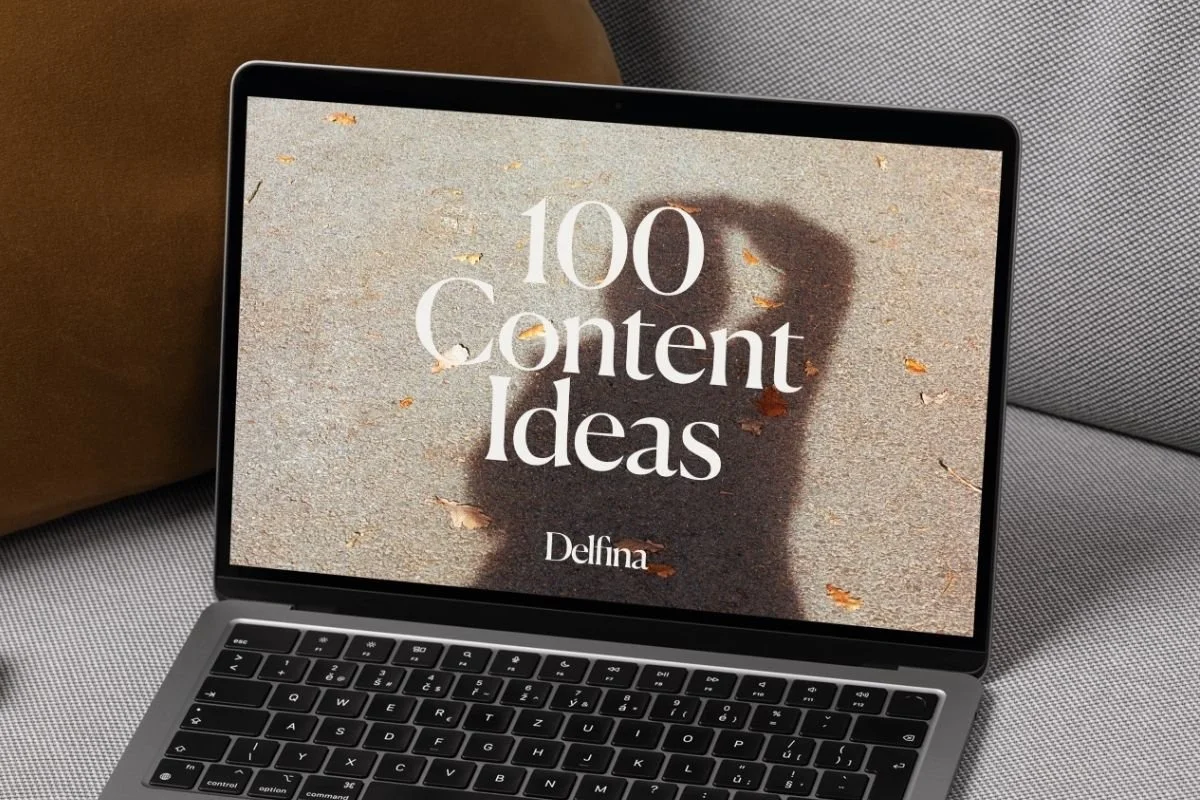
That's where our free workbook 100 Content Ideas becomes practical. It's not a list of generic prompts, it's a structured content planning tool organized around five recurring themes fans respond to, designed to help you:
Generate 3-6 months of social media content from your existing artistic world (no manufactured personas required);
Identify your recurring formats that feel natural to create and share;
Map your visual and narrative language so every post reinforces rather than dilutes your identity;
Build a sustainable creative rhythm that doesn't require daily posting or performance anxiety.
By the end, you'll have clarity on what to share, how to share it, and why it matters, without feeling like you've compromised your art for marketing.
Content doesn't have to feel heavy. When it's aligned with your artistic identity, sharing becomes as natural as creating. Because it's all part of the same conversation.
Further Reading: Research Behind This Framework
This article draws on academic research across brand psychology, fan studies, platform economics, and cultural labor. If you'd like to explore the evidence underlying these insights, here are the key sources:
On Fan Attachment & Psychology:
Nancy K. Baym, Playing to the Crowd (2018) — Groundbreaking study on "relational labor" and how musicians build intimate connections with audiences through ongoing engagement. Essential reading on why process transparency matters.
Chen, Lu & Huang, "Idol Worship" (2022) — Research demonstrating how fans develop brand loyalty through parasocial attachment and identity affiliation with artists.
Derbaix & Korchia, "Individual Celebration of Pop Music Icons" (2019) — Shows how solo-fan relationships (not just community) yield strong identification when fans use artists as identity-construction tools.
On Cultural Branding & Artist Identity:
Douglas B. Holt, How Brands Become Icons (2004) — Foundational theory on how brands (and artists) become cultural symbols by resolving identity tensions audiences experience. Explains why mythology matters more than marketing.
Sarah Banet-Weiser, Authentic™ (2012) — Explores the "authenticity paradox": how audiences accept strategic brand construction as authentic when it maintains internal coherence. Critical for understanding performative authenticity.
On Digital Platforms & Creator Economy:
Mark Mulligan, "How to Make Artist Centric" (2023) — Analysis of Spotify's algorithmic economics and why streaming often fails to compensate emerging artists despite platform visibility.
West, "TikTok Takeovers" (2025) — Documents how 74% of TikTok users discover and share new music, and how short-form video fundamentally reshapes artist discovery independent of prior fame.
Musgrave, "Working in the Content Factory" (2025) — Critical examination of how platform demands for constant content production create mental health risks and labour precarity for musicians.
On Fan Communities & Participatory Culture:
Henry Jenkins, Textual Poachers (1992) and Spreadable Media (2013) — Seminal work on participatory culture showing how fans function as co-creators rather than passive consumers, organizing collective action that shapes artist visibility.
Cho, "Exploring Fantasy Theme Analysis: BTS ARMY Fandom" (2024) — Case study demonstrating how organized fan communities become inseparable from artist brand identity and commercial success.
On Creative Labor & Sustainability:
David Hesmondhalgh, The Cultural Industries (2019) — Critical analysis of creative labour precarity, autonomy, and exploitation in digital economies. Essential context for understanding independent artist challenges.
These sources represent interdisciplinary research synthesizing psychology, sociology, cultural studies, and platform economics. Together, they reveal that sustainable artist careers depend not on marketing tactics but on understanding the psychological, cultural, and economic systems shaping how audiences connect with music in the digital age.
A quick-start workbook for music artists who don’t know what to post next. Generate ideas quickly, uncover what fits your brand, and bring coherence to your online presence.