Thought leadership & editorial strategy
Clear, authoritative narratives for leaders navigating complex societal issues.
Based in Montreal. Working with executives, global organizations, and mission-driven teams across North America, Europe, and international contexts.
What I do
I help leaders articulate complex ideas with clarity, authority, and strategic intention. My work combines deep editorial craftsmanship with structured narrative thinking. I work and write fluently in English and French, and also speak Spanish and Brazilian Portuguese.
01
Executive ghostwriting
02
Op-eds and public commentary
03
Longform editorial (reports, essays, white papers)
04
Thought‑leadership platform design
05
LinkedIn thought-leadership systems
06
Advisory and one‑to‑one content coaching
07
Narrative frameworks and message architecture
What distinguishes my approach
Research translation & argument architecture
I translate complex, interdisciplinary material—technical, scientific, policy‑driven—into clear, persuasive narratives that senior audiences can act on.
Cross‑cultural & multi‑stakeholder narrative framing
I build narratives that hold across sectors, geographies, and institutional cultures. This includes work in global development, research environments, corporate contexts, and politically sensitive settings.
Editorial systems & narrative governance
I bring structure and coherence to fragmented environments. Many clients come to me with unclear goals, dispersed inputs, or internal misalignment. I create the editorial and narrative systems they need to communicate with focus.
How I work
Thought leadership is not just content creation. It is a process of intellectual partnership and disciplined narrative design. Clients work with me because I:
Ask incisive questions that clarify thinking and reveal the real communication problem.
Stay grounded in high‑pressure, high‑stakes environments.
Create a collaborative space where ideas develop with rigor and ease.
Work with discretion, emotional intelligence, and cultural awareness.
Bring a coaching‑informed approach that helps leaders articulate what they actually believe.
Provide structure, reliability, and clear decision pathways.
Process
A clear editorial methodology designed for complexity, sensitivity, and impact.
1. Diagnostic
Identify the leadership challenge and the underlying problem.
Map audiences and interpretive frames across internal and external contexts.
Analyze power dynamics and narrative risk.
Surface societal, cultural, regulatory, and technical constraints.
Assess existing materials and internal alignment.
Outcome: clarity on the narrative terrain before writing begins.
3. Editorial Development
Conduct research to support arguments.
Ghostwrite or co‑develop op‑eds, essays, speeches, and longform.
Refine logic, structure, clarity, and rhetorical precision.
Maintain authenticity while sharpening authority.
Coordinate with comms teams to ensure alignment.
Provide direction for derivative content.
Outcome: high‑quality editorial products backed by strong conceptual foundations.
2. Narrative Architecture
Develop the thesis, argument structure, and message hierarchy.
Define narrative frames suited to the audience and the moment.
Establish editorial positioning: the leader’s standpoint and contribution.
Set voice, tone, and stylistic parameters.
Build content pillars aligned with expertise, values, and mandate.
Select formats, channels, and publication pathways.
Design a forward‑looking content strategy.
Align across cultural and stakeholder contexts.
Outcome: a durable narrative system that guides all editorial outputs.
4. Implementation Support
Thought‑partnership sessions to refine ideas.
Publication and amplification strategy.
LinkedIn systems and ongoing narrative routines.
Internal alignment across leadership, comms, and subject‑matter teams.
Support during sensitive or high‑stakes communication moments.
Outcome: coherent, consistent narrative presence.
Case snapshots
Interdisciplinary research network
I clarified competing internal goals, reframed complex AI research into accessible themes, and built editorial processes that enabled consistent public communication.
Social Innovation Nonprofit
I built a narrative framework for a multi‑stakeholder project on housing, integrating research, audience analysis, and narrative‑risk considerations to enable safe and accurate public communication.
International ethical storytelling project
I shaped the overall editorial direction, established a unifying narrative spine for multi‑author contributions, and helped practitioners articulate sensitive insights with clarity and care.
Global engineering firm
I redesigned an underperforming internal newsletter by auditing the existing format, identifying structural weaknesses, and proposing a new editorial system optimized for engagement and comprehension.
Refugee economics reporting
I synthesized academic research, field reporting, and political constraints into a narrative that shifted how audiences understood refugee participation in local economies.
Why clients work with me
My multilingual background facilitates cross-cultural narrative framing and collaboration in international contexts.
Reliable, organized, and trusted in sensitive contexts.
Comfortable working with senior leaders under pressure.
Skilled at navigating ambiguity and complexity.
Empathetic, respectful, and culturally attuned.
Able to collaborate with executives, researchers, policymakers, and comms teams.
Known for producing high‑quality work on time.

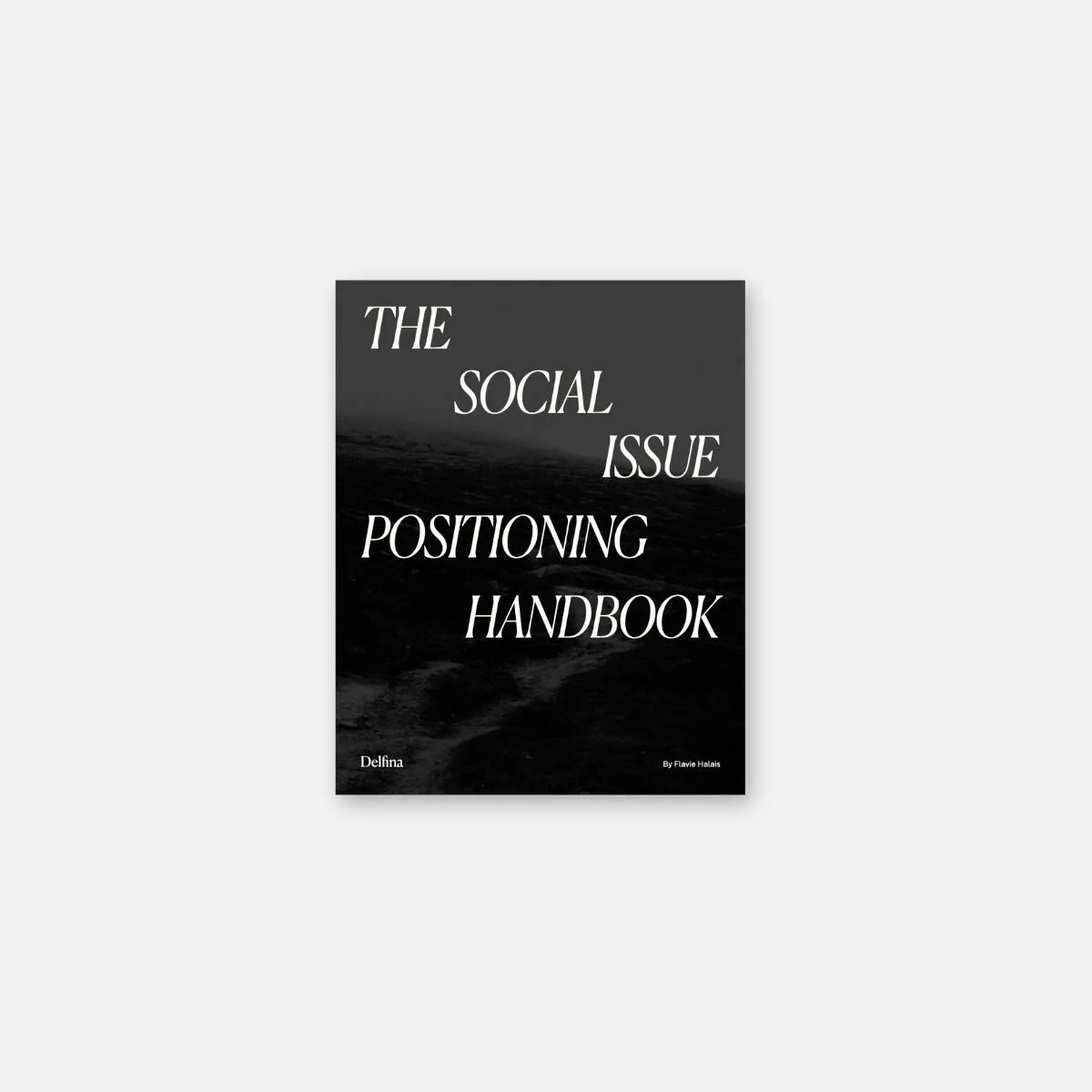
The Social Issue Positioning Handbook
A step-by-step guide to communicating about the world’s most pressing issues, combining practical advice, real-world examples and insights from academic research.
Ideas




Who I work with
Primary: corporate executives communicating complex societal issues or building social acceptability around innovation and transformation.
Secondary: Global NGOs, INGOs, philanthropic organizations, think tanks, applied research labs, and agencies seeking a senior editorial partner.

About Flavie Halais
I’m a writer and editorial strategist helping leaders communicate complex ideas with clarity and authority. My work sits at the intersection of research, policy, corporate strategy, and public-interest communications. I specialize in translating dense or technical material into accessible narratives, designing editorial systems, and supporting decision-makers through sensitive or high-stakes communication moments.
Before consulting, I worked as a journalist covering international development, displacement, and political economy, publishing in The Guardian, Le Monde, WIRED, and Devex. That experience shaped my ability to synthesize multi-disciplinary perspectives and operate with precision across cultures and contexts.
I have collaborated with global organizations and mission-driven companies—including UNHCR, Danone, and WSP—and bring experience across NGOs, research labs, corporate teams, and multi-stakeholder environments. I work and write in English and French, and speak Spanish and Brazilian Portuguese.
FAQs
-
Leaders responsible for communicating complex ideas in public, policy, innovation, or societal‑risk contexts.
-
Yes. My editorial process preserves your authentic tone while elevating clarity and authority.
-
With discretion, grounding, and analytical rigor. I map narrative risks early and adjust the strategy accordingly.
-
Yes. I frequently collaborate as a senior external strategist or editorial partner.
-
Project scope determines timing, but most engagements move through diagnosis, architecture, and writing within several weeks.
-
Yes. I write in English and French, and I speak Spanish and Brazilian Portuguese, which supports cross-cultural alignment in global projects.
Let’s talk
Send me a message with a brief description of your project and a few availabilities, and we’ll schedule an introductory call.