About
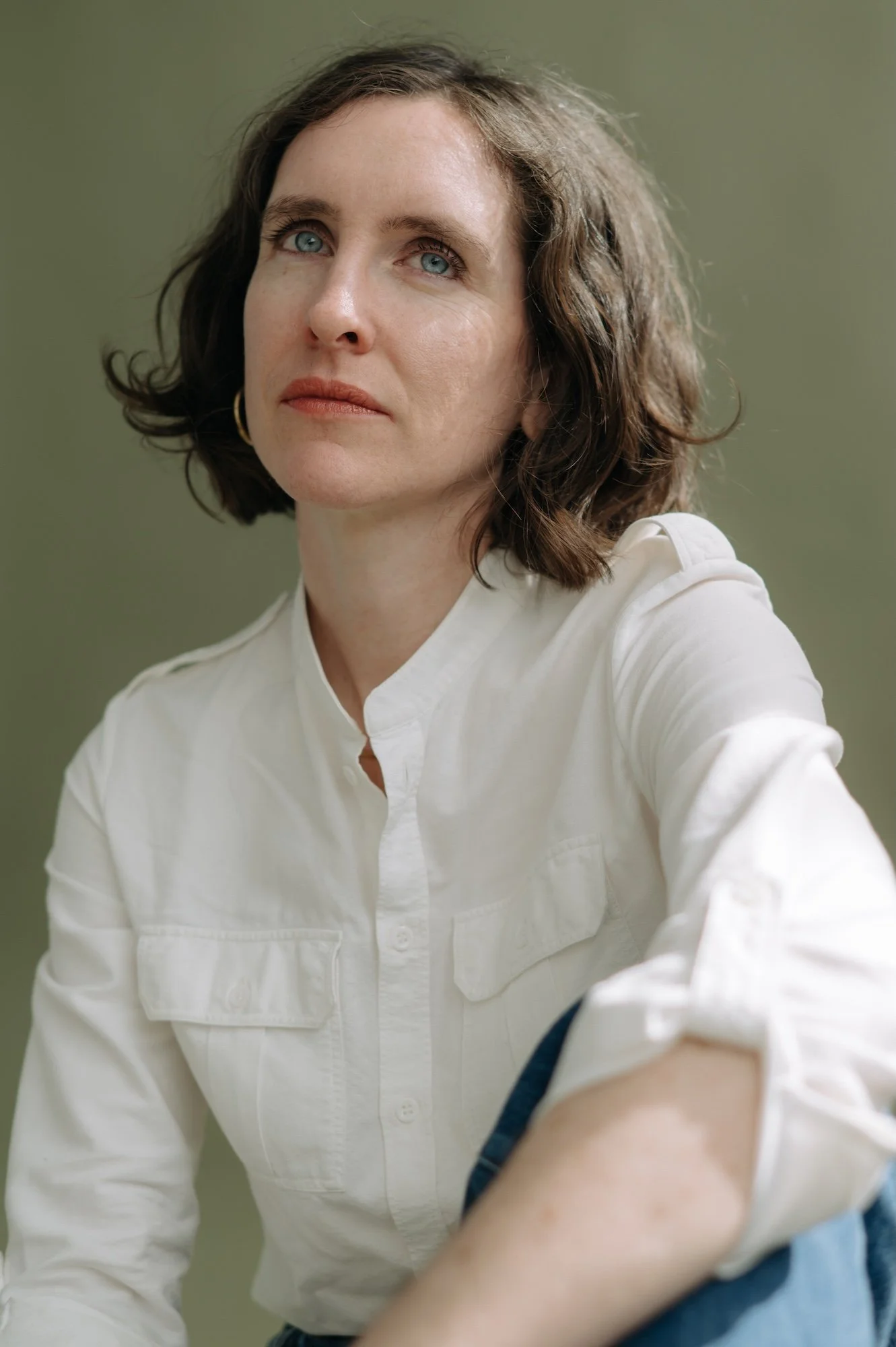
Flavie Halais
Governance-first narrative thinking for organizations navigating contested ground.
The past few years have made it genuinely difficult to know what to say. Political polarisation, shifting DEI expectations, and competing pressures from investors, staff and boards make every public statement carry risk.
A particular kind of organisation has gone quiet as a result, because the cost of speaking has started to feel higher than the benefit. They are still doing the work: continuing their environmental programs, protecting community relationships, holding to commitments made when it was less complicated to do so. But they have lost confidence in their ability to talk about it without saying the wrong thing, or fracturing a relationship they've spent years building.
If this is where you are, you don't have a communications problem. You have a decision problem that is showing up in your communications. That distinction matters, because it changes what help actually looks like.
I came to this work through journalism, covering social issues in contexts where the ethical stakes were immediate and the margin for error was small. Every story raised the same questions: how do you hold people in power to account while remaining fair? How do you give people the opportunity to tell their story without exploiting it? Those were daily, consequential decisions, made under constraint.
That formation stayed with me when I moved into organisational communications. What I found on the inside was a different version of the same problem: well-intentioned organisations working in permanent emergency mode, receiving pressure from all directions, gradually drifting from the values they'd started with, out of the sheer difficulty of holding a position when everything around you is moving.
What I've learned, across both contexts, is that the most useful thing I can offer isn't messaging, but the structure that makes good messaging possible.
I know what it feels like from the inside. There was a period when I stopped speaking and writing publicly altogether, because the fear of saying the wrong thing felt paralysing. I understand the freeze. I understand the exhaustion of trying to do the right thing and still facing pushback. That experience, combined with formal training in trauma-informed practice, has given me something that research skills alone don't provide: the ability to walk into a high-pressure situation and help people think clearly when they've lost confidence in their own judgment.
My journalism work appeared in WIRED, The Guardian, Le Monde and El País, among others, nd took me across Latin America and East Africa — Haiti, Colombia, Brazil, Rwanda, Kenya, Uganda — reporting on cities, displacement, and development. It included a long-form investigation into the economic impact of forced displacement in East Africa, backed by the European Journalism Centre, a fair example of how I work: following a complex problem across stakeholders, contexts, and disciplines until something useful emerges.
Over the past decade I've brought that same approach to organisations: small nonprofits, academic research centres, and large multinationals in Canada, South Africa, Europe and beyond. I've edited a guidebook on ethical storytelling, published two research-based frameworks on social issue positioning, and advised organisations navigating contested terrain: housing financialisation, AI's societal impacts, institutional responses to global crises, environmental preservation, and more.
— Flavie
I work with one or two clients at a time, deliberately. This is not a volume practice.
If you're carrying a communications challenge that feels bigger than your current resources can handle, and you suspect the real problem runs deeper than the messaging, I'd like to hear about it.
Why Delfina?
The name comes from Delphi, home to the priestesses of the Temple of Apollo, the Greek God of Prophecy. For over 1000 years, the priestesses dispensed ‘prophecies’ to people in power hailing from all over the ancient world. Highly educated, they provided independent, authoritative advice informed by knowledge accumulated over years spent in regular contact with the elite. Rumour has it the priestesses were also high on hallucinogetic gas emanating from the rock of Mount Parnassus. But their counsel was still very, very reliable.
Stay sharp on the decisions that matter.
Analysis, tools, and frameworks shaping how organisations decide where they stand.